
TPIP Profiles #4: Florence Balcombe, Real-Life Vampire Slayer

Name: Florence Balcombe/Stoker

Born: 17th July 1858

Died: 25th May 1937

Country of origin: Ireland and England, UK

In a nutshell: Florence Balcombe was a savvy businesswoman who fought tooth and nail to slay the vampire Count Orlok and protect the rights of her late husband’s masterpiece. 

***********************************

Have you heard of Nostferatu? A German horror film way back from the days of silent cinema? If not, don’t worry, put a pin (or should it be stake?) in that for now and we’ll circle back to it later.

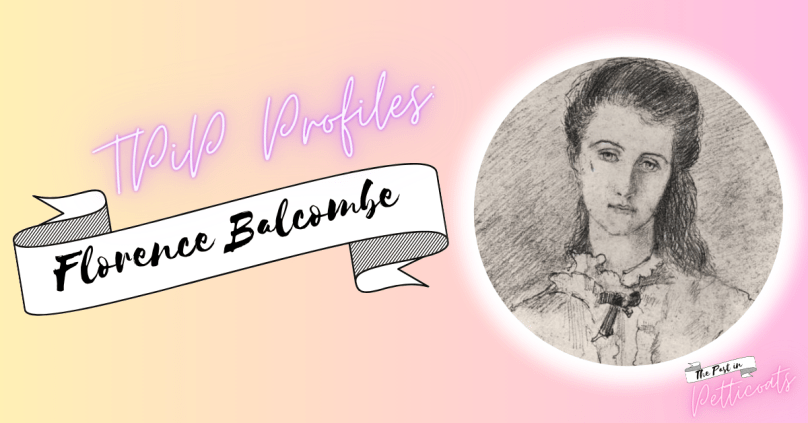
First, let me tell you a little bit about Florence Balcombe. She was born in Cornwall in 1858 to a military family but then moved to Ireland at age two. As she grew up, she was considered a real beauty and became the subject of many art pieces, including a sketch by her then-boyfriend, Oscar Wilde (yes, the one you’re thinking of). 

This is a quote from Wilde that describes just what he thought of her:

“I am just going out to bring an exquisitely pretty girl to afternoon service in the Cathedral. She is just seventeen with the most perfectly beautiful face I ever saw and not a sixpence of money. I will show you her photograph when I see you next.”

However, Florence and Wilde’s relationship wasn’t built to last and two years into their courtship, Florence moved on to another famous Dublin resident with a name you might recognise. Florence and Bram Stoker married in 1878 and subsequently moved to London so that Bram could follow his theatrical ambitions by taking the job as a manager at the Lyceum Theatre in London’s West End (now the home of The Lion King but not then obviously, they just had regular Hamlet in the late 1800s). 

Wilde was initially hurt by Florence’s decision but eventually they came to be good friends and the newly married Stokers had a happy marriage by all accounts. Bram flourished in his role and became friends with leading Victorian actor Sir Henry Irving. Allegedly they even bonded over both having wives with the name ‘Florence’ since it had been popularised in recent decades due to a certain Lady with the Lamp. The Stokers even named their only child after their friend and had him christened ‘Irving Noel Thornley Stoker’. 

It was during Bram’s time working at the Lyceum that he began working on his novel, Dracula. The character was said to be inspired both by the legendarily ruthless fifteenth century ruler Vlad the Impaler and Bram’s old buddy Irving. 

Unfortunately, the novel suffered limited success and critical disdain after it was published in 1897 and as Bram aged he experienced many health problems. Due to Bram’s poor health, Florence cared for her husband and took charge of family affairs. Bram even remarked to his brother that “she had to do all the bookkeeping and find the money to live on – God only knows how she managed”.

It was after Bram’s death in 1912 that Florence’s business insight really sharpened. After the discovery of a discarded chapter from the original book, Florence had this published as extra content. Then she sold the rights of the book in various countries. Despite the initial critical resistance, the more people that read Dracula or saw an adaptation on stage, the more Bram’s terrifying villain was starting to solidify his place as a horror icon.

It was how Florence took on sinister spook Count Orlok, the vampire villain of the 1922 movie Nosferatu, that really got people talking though. Nosferatu, made by a German film studio called Prana, had many similarities to Dracula but no rights or permissions had been sought prior to the film’s release. So, Florence, as the rights holder of Dracula, took Prana to court. A three-year legal battle followed with the Society of Authors flying to Florence’s side. Eventually, Florence won the case. Prana ended up declaring bankruptcy and every copy of Nosferatu was to be destroyed.

However, as Florence should know from her husband’s book, it’s pretty hard to slay a vampire and despite the claim that all copies had been destroyed, the film resurfaced a few years later and is now a cult classic and staple of early silent horror movies. You just can’t kill the undead, Flo. 

To find out more about Florence, head to the Women’s Museum of Ireland website. Image credit goes to Merlin Holland, the picture was drawn by Oscar Wilde.
TPIP Profiles #3: The Fearless Mary Seacole

Name: Mary Seacole

Born: 23rd November 1805

Died: 14th May 1881

Country of origin: Jamaica and England, UK

In a nutshell: Mary Secole was a nurse with an epic drive to help others. She is best known for her time as a war nurse on the frontlines of battle and for turning her incredible life into a Victorian bestseller.

***********************************

Mary Seacole was a healer with plenty of bottle. From working with the sick in a cholera epidemic to healing on the frontlines of war, Seacole certainly wasn’t afraid to do what was necessary (and then some!) to help others. She is best known now for her time as a nurse in the Crimean War though she’s not usually the nurse people tend to most closely associate with this particular conflict. Whilst Florence Nightingale did some wonderful things for nursing and we’ll definitely tell her story at a later point, I want to put Mary Seacole first because more people need to know her story.

Seacole was born in Kingston, Jamaica in 1805. Her father was a white Scottish lieutenant and her mother was a black boarding house manager. At this point in history, slavery had yet to be abolished but she was born into ‘freedom’ which meant her rights were still greatly restricted as a mixed race woman. As a child, Seacole developed a love of medicine from her mother who was known locally as ‘The Doctress’. She practised Jamaican folk medicine on her dolls and pets and met many injured soldiers from helping at her mother’s boarding house. Soon enough, she was heading on a career path in nursing and took a trip abroad to learn more. 

She travelled to London, Haiti, Cuba and the Bahamas and developed her medical knowledge more and more along the way. After returning to Jamaica in 1826, Seacole went on to meet her husband Edwin Horatio Hamilton Seacole and the two married in 1836. However, Edwin became ill and despite Mary’s nursing, he died only years into their marriage. Her mother died not long after and Seacole suffered greatly with the grief. 

She was still in Jamaica when the cholera epidemic came and she began treating sufferers at her mother’s boarding house, revamped due to a fire. In 1851, Seacole travelled to Cruces in Panama and the cholera epidemic followed. She treated the cholera victims in the area until eventually catching the illness herself. She recovered and returned to Kingston in 1853 where she began treating those with yellow fever. It was during this time that Seacole was asked to treat the soldiers at Up-Park Camp, British army headquarters in Jamaica. 

News soon reached Seacole of the outbreak of the Crimean War all the way in eastern Europe and she felt compelled to help the injured soldiers. She travelled to Britain once again and asked the Home Office if she could be enlisted as an army nurse but was denied. In her autobiography, Seacole herself questions whether her rejection from both the Home Office and the Crimean Fund, a fund-raising campaign to support the injured troops, was down to racism. However, Seacole was determined to help those in need and be reunited with her ‘sons’, the British soldiers she’d healed previously, and she funded her own trip to the Crimea. When she got there, she developed the British Hotel with her late husband’s relative, Thomas Day. The hotel treated the sick and wounded close to the frontlines and news of her kindness and bravery made its way back to British shores.

Despite her fame, Seacole returned to Britain at the end of the war practically penniless. However, those she had saved weren’t so quick to forget her good deeds and countless letters were written into the media of the time thanking her for her care and donations started coming in to support her financially. She also generated funds from her autography, The Wonderful Adventures of Mrs Seacole, a bestseller of the time.

Seacole moved back to Jamaica for a short while before settling in London. She had friends in high places at this time and even had a bust created of her by Queen Victoria’s nephew. She died in 1881 and her name fell into obscurity for many years. Her story has been given much more love and attention in recent times as more black and mixed race history is brought into the spotlight. A statue of her was placed in front of St Thomas’ Hospital in London in 2016.

To learn more about Seacole, visit the Mary Seacole Trust website. Thank you for reading.

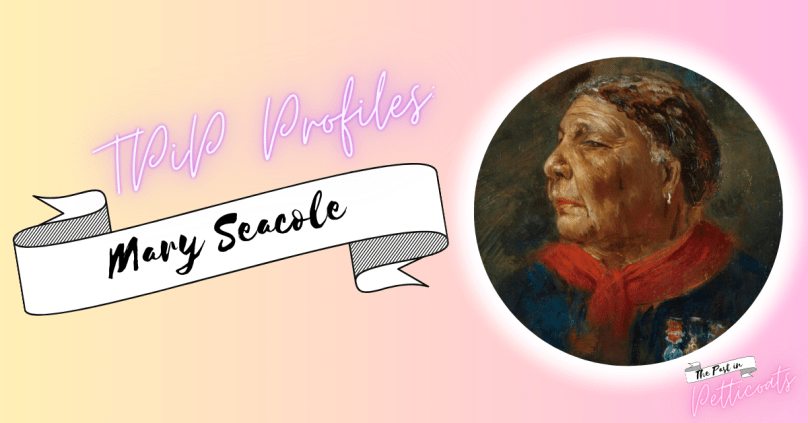
Credit to the National Portrait Gallery for the Mary Seacole portrait (painted by Albert Charles Challen)