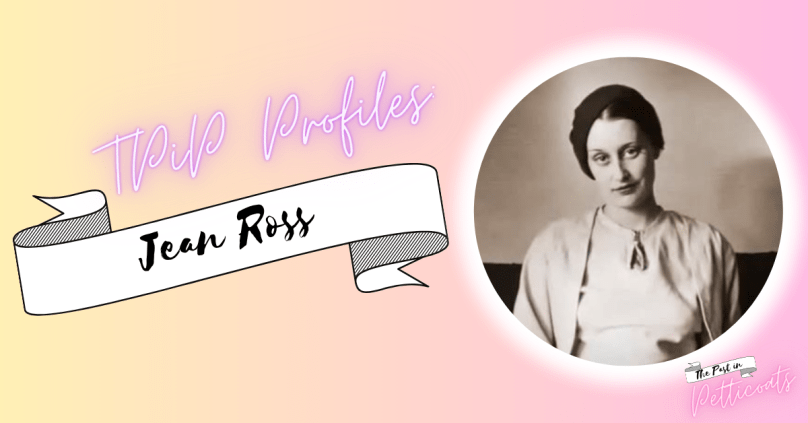
TPIP Profile #8: Jean Ross, Far From Fiction 

Name: Jean Iris Ross Cockburn 

Born: 7th May 1911

Died: 27th April 1973

Country of Origin: England, UK 

In a nutshell: Best known as the inspiration for the apolitical and hedonistic Sally Bowles in the novels of Christopher Isherwood and the musical Cabaret, Jean Ross’ wild life took her from the Berlin cabaret clubs of the Weimar Republic to the war-torn streets of Madrid as a correspondent. 

***********************************

Have you seen the musical Cabaret or read the novels of Christopher Isherwood? Maybe you’ve heard Liza Minelli belting the title track as the Kit Kat Club’s Sally Bowles? Did you know Sally Bowles was based on a real person? This was author Christopher Isherwood’s friend, the then 19 year-old Jean Ross. When she was living in Berlin she worked as a cabaret club singer before the political situation in Germany made her and her bohemian circle up and leave. But, this is only the start of the life and times of Jean Ross so let’s take a deeper look into this often misrepresented figure. 

Born in Egypt in 1911 to British parents, Jean Ross left Africa to be brought up in England. She was a vastly intelligent but often bored child and hated school. At the age of 16 she pretended to be pregnant so she would be expelled. Her parents then sent her to a Swiss finishing school but Jean went rogue and enrolled into the Royal Academy for Dramatic Art before dropping out, getting a small part in a movie and moving to Berlin to pursue an acting career. 

At this point in history, the Weimar Republic led Germany. This was the German government from the end of the First World War in 1918 to the accession of the Nazi party in 1933. This period was one of cultural and artistic revolution but also of hyperinflation and mass unemployment due to the war and the Great Depression. Whilst working as a cabaret singer and small-time actress in Berlin in this unsettled Germany, Jean Ross met British-American author Christoper Isherwood, a man who would have a huge impact on her life. 

Isherwood had been drawn to Berlin to explore the night life, especially the gay clubs and cabarets. After their first meeting, in which Jean Ross spoke openly about her sexual conquests, they became close friends and began living together. Through her connection to Isherwood, Ross became familiar with many other gay male writers in Isherwood’s circle of friends. 

It was around this time that Ross entered into a relationship with actor Peter van Eyck but soon they parted and Ross discovered she was pregnant. Isherwood helped her get an abortion but due to complications, Ross spent time in hospital recovering from what turned out to be a botched abortion. Through this time, the poverty in Germany and Hitler’s influence in the local attitudes towards minorities, Jews in particular, was turning Ross and Isherwood’s beloved Berlin into a much darker environment, though it took them time to see it. Ross left Germany for the UK in 1932. Isherwood stayed a while longer due to his relationship with the German Heinz Neddermeyer but after Hitler was appointed chancellor in 1933, he and Neddermeyer followed Ross. 

Back in London, Ross began work as a theatre and film actress, model and reporter. The latter of those roles was secured through her relationship with communist journalist Claud Cockburn. He greatly influenced Ross’ political leanings and helped her get a job writing for left-wing newspaper the Daily Worker. Not forgetting her friends though, Ross used her connections in the British film industry to help both herself and Isherwood get jobs as translators. Isherwood would soon thrive in the film industry but also turned back to writing novels. He revisited his diaries from his time in Berlin and wrote a novella called Sally Bowles inspired by his friends and experiences from the Weimar Republic. It was apparent though that Sally Bowles was very much inspired by Jean Ross, especially as her abortion appeared as a scene in the book. Ross was initially reluctant to give Isherwood permission to publish the novella due to abortion still being illegal and a taboo subject in Britain at the time but eventually she relented and Sally Bowles became a huge hit. 

Ross continued her work in the film industry by writing film criticism in the Daily Worker and even serving as the General Secretary of the British Workers’ Film and Photo League which sought to make films with an anti-capitalist focus. 

Things soon changed again for Ross when she starting working in Spain as a war correspondent during the Spanish Civil War. She worked there with Cockburn and her lover John Cornford until Cornford died fighting as part of the Spanish communists’ militia. Over the next few years, Ross worked as a war correspondent for the Daily Express. She remained in Spain despite the bombings and often reported directly from the front lines. She witnessed the Siege of Madrid and returned to England just two months before giving birth to her daughter Sarah by Cockburn. Cockburn left Ross and their daughter for another woman just three months later.

Ross moved to Hertfordshire with her mother and daughter and devoted herself to raising Sarah whilst never losing her strong socialist opinions. She died in 1973 from cancer. 

It was only after Ross’ death that Isherwood finally confirmed Sally Bowles had indeed been based on Ross. Sarah Caudwell, Ross’ daughter, wrote an article in 1986 shedding some light on how Ross truly felt about the connection. The article shares how Ross felt frustration over the fame the portrayal gave her, how journalists wanted to know about her sexual exploits and not anything about the work she had done in her political and journalistic career. Understandably so, whether you agree with her political stance or not, you can’t argue that, though Sally Bowles is a fascinating character, every moment of Jean Ross’ life following her departure from Berlin shows her to politically-driven and deeply concerned for the welfare of others, two traits that you don’t see in Sally Bowles. In fact, there is some reason to believe that Isherwood, with all the success and fame, was perhaps projecting his own lack of understanding of the political climate in 1930s Germany onto Sally.  

In Sarah Caudwell’s article she said that her mother “may well, at 19, have been less informed about politics than Isherwood, five or six years older; but, when the Spanish war came and the fascists were bombing Madrid, it was she, not Isherwood, who was there to report it.”… which seems to sum up the situation pretty well. 

Thanks for reading!

*Image sourced through Wikimedia Commons
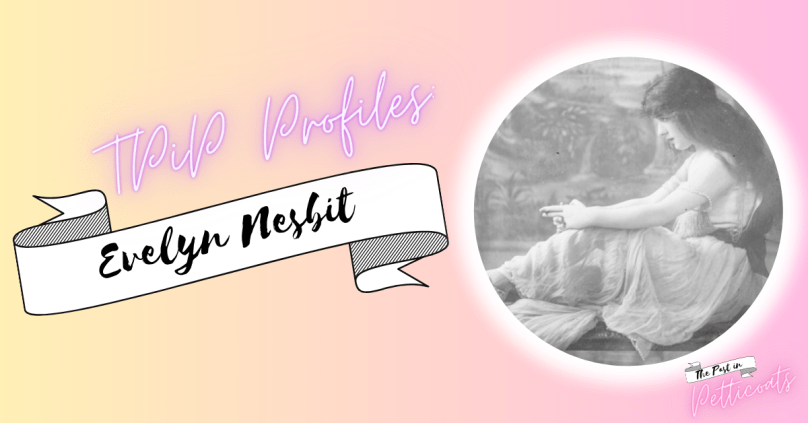
TPIP Profile #7: Evelyn Nesbit, From Rags to Riches to the Witness Stand

Name: Evelyn Nesbit

Born: 25th December 1884 (possibly 1885)

Died: 17th January 1967

Country of Origin: USA

In a nutshell: Both a model and actress, Evelyn is best known nowadays for her involvement in the murder trial of Stanford White. But, even before being rocked by scandal, her face was one of the best-known of her day. 

*Trigger warning: Sexual assault 

***********************************

In January 1907, a court case began which the press of the time called ‘the trial of the century’. Evelyn Nesbit would have been around 22 years old when she appeared as a star witness. She told the court about how she had been sexually assaulted by the architect Stanford White. At the turn of the century, it was still rare for accusations of sexual assault to be shared in court. However, this wasn’t the crime that had brought Evelyn to the witness stand. She was to give evidence in defence of White’s murderer, her husband, Harry K. Thaw. It was a complicated and highly publicised case that would lead to Evelyn’s cataclysmic rise to fame to take a dramatic turn.

Evelyn was born around 1884 in Pennsylvania. Her exact year of birth is unknown, Evelyn herself even said she wasn’t sure due to the records being lost in a fire and her mother, Evelyn Florence, possibly changing her year of birth depending on the requirements of child labour laws at the time. She grew up with a love of books and learning but her father, an attorney, died when Evelyn was 10 and the family fell into poverty. 

Evelyn, her mother and younger brother moved around for a while before settling in Philadelphia and all three of them got work in a department store. One day, when Evelyn was about 14, she was spotted by an artist who asked Evelyn to pose for her. This was Evelyn’s first introduction into what was to become her profession. The family then relocated again, this time to New York and soon enough Evelyn was posing for various high-profile artists of the time. Possibly the most notable of these was James Carroll Beckwith, whose patron was none other than millionaire John Jacob Aster. 

Evelyn’s mother was thrown into the role of manager for her daughter as she became more and more in demand. She transitioned easily from the star of portraits to the star of photographs and became a renowned fashion model. She starred in advertising campaigns and soon got a role as a chorus line girl in the Broadway play, Florodora. It was around this time that rising star Evelyn was introduced to Stanford White. He was an architect known for working on various big projects, including the second iteration of Madison Square Garden. White and Evelyn began spending time together and he lavished her and family with expensive gifts and paid for their accommodation. Evelyn was already the subject of much press attention at the time and stories circulated about their relationship. One story that became particular popular was that White had a red velvet swing hanging from the ceiling of his apartment that he had allegedly pushed Evelyn on during her first visit to his place. The press would later give her the nickname ‘the girl in the red velvet swing’. During this time, Evelyn would have been around 16, White was in his late 40s.

After a while, Evelyn and White’s relationship came to an end and she became associated with other men, including the millionaire Harry K. Thaw. This was during the time when she took on a speaking role in the play, The Wild Rose. Thaw and Evelyn married in 1905 and they relocated to quiet Pittsburgh. 

It was what happened next, during a visit to New York, that would dominate any mention of her name in history from this point on. At a performance at the Madison Square Garden rooftop, Thaw shot White dead at close range. 

In court, Thaw pleaded temporary insanity, claiming that he was acting in defence of his wife who had been raped by White. Evelyn was even brought forward to take the stand and she shared the story of what had happened to her at the hands of White in detail. The media of the time were completely absorbed in the ‘crime of the century’ and for the first time in US history, the jury had to be sequestered. Eventually, Thaw was found not guilty and was interned in a psychiatric hospital rather than a prison. 

Evelyn was supported through the court proceedings by Thaw’s family but once the trials were done with, they cut her off financially and Evelyn made her own way through work as a vaudeville star and silent film actress. She had a son called Russell in 1910 who she claimed with Thaw’s child after his conception during a visit to where Thaw was hospitalised. Throughout the rest of his life, Thaw would deny paternity. 

Thaw was let out of from hospital in 1915, the same year that Evelyn divorced him. Not long after, Thaw committed violent and sexual abuse of 19-year-old Frederick Gump and, after another plea of insanity, was placed in an asylum. 

For a time, Evelyn was married to her dance partner, Jack Clifford, but the marriage was short-lived as he couldn’t handle her fame. Evelyn would struggle with finances and addiction for many years. She worked as a technical advisor on a highly fictionalised film about her life, ‘The Girl in the Red Velvet Swing’, released in 1955 and died in California in 1967. 

Evelyn is also featured in the book, musical and film, Ragtime. 

Now you’ve read her story, what do you think? Was Evelyn a fame and money-hungry queen of scandal and ‘girl in the red velvet swing’ or a mistreated teenager and abuse survivor who had to grow up too fast to support her family? You decide. 

TPIP Profiles #4: Florence Balcombe, Real-Life Vampire Slayer

Name: Florence Balcombe/Stoker

Born: 17th July 1858

Died: 25th May 1937

Country of origin: Ireland and England, UK

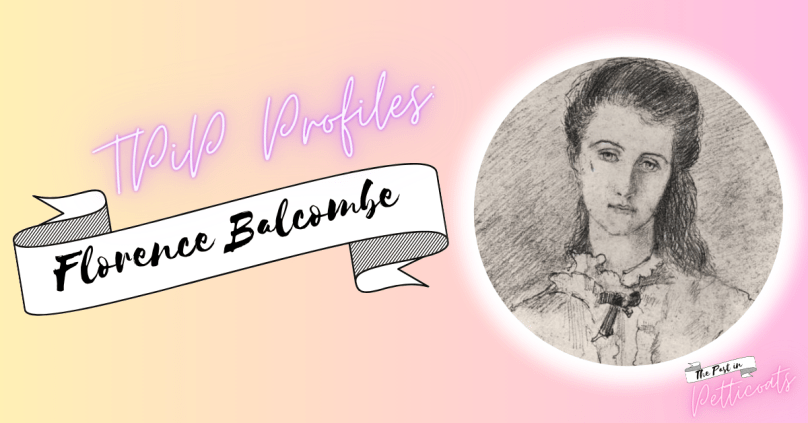
In a nutshell: Florence Balcombe was a savvy businesswoman who fought tooth and nail to slay the vampire Count Orlok and protect the rights of her late husband’s masterpiece. 

***********************************

Have you heard of Nostferatu? A German horror film way back from the days of silent cinema? If not, don’t worry, put a pin (or should it be stake?) in that for now and we’ll circle back to it later.

First, let me tell you a little bit about Florence Balcombe. She was born in Cornwall in 1858 to a military family but then moved to Ireland at age two. As she grew up, she was considered a real beauty and became the subject of many art pieces, including a sketch by her then-boyfriend, Oscar Wilde (yes, the one you’re thinking of). 

This is a quote from Wilde that describes just what he thought of her:

“I am just going out to bring an exquisitely pretty girl to afternoon service in the Cathedral. She is just seventeen with the most perfectly beautiful face I ever saw and not a sixpence of money. I will show you her photograph when I see you next.”

However, Florence and Wilde’s relationship wasn’t built to last and two years into their courtship, Florence moved on to another famous Dublin resident with a name you might recognise. Florence and Bram Stoker married in 1878 and subsequently moved to London so that Bram could follow his theatrical ambitions by taking the job as a manager at the Lyceum Theatre in London’s West End (now the home of The Lion King but not then obviously, they just had regular Hamlet in the late 1800s). 

Wilde was initially hurt by Florence’s decision but eventually they came to be good friends and the newly married Stokers had a happy marriage by all accounts. Bram flourished in his role and became friends with leading Victorian actor Sir Henry Irving. Allegedly they even bonded over both having wives with the name ‘Florence’ since it had been popularised in recent decades due to a certain Lady with the Lamp. The Stokers even named their only child after their friend and had him christened ‘Irving Noel Thornley Stoker’. 

It was during Bram’s time working at the Lyceum that he began working on his novel, Dracula. The character was said to be inspired both by the legendarily ruthless fifteenth century ruler Vlad the Impaler and Bram’s old buddy Irving. 

Unfortunately, the novel suffered limited success and critical disdain after it was published in 1897 and as Bram aged he experienced many health problems. Due to Bram’s poor health, Florence cared for her husband and took charge of family affairs. Bram even remarked to his brother that “she had to do all the bookkeeping and find the money to live on – God only knows how she managed”.

It was after Bram’s death in 1912 that Florence’s business insight really sharpened. After the discovery of a discarded chapter from the original book, Florence had this published as extra content. Then she sold the rights of the book in various countries. Despite the initial critical resistance, the more people that read Dracula or saw an adaptation on stage, the more Bram’s terrifying villain was starting to solidify his place as a horror icon.

It was how Florence took on sinister spook Count Orlok, the vampire villain of the 1922 movie Nosferatu, that really got people talking though. Nosferatu, made by a German film studio called Prana, had many similarities to Dracula but no rights or permissions had been sought prior to the film’s release. So, Florence, as the rights holder of Dracula, took Prana to court. A three-year legal battle followed with the Society of Authors flying to Florence’s side. Eventually, Florence won the case. Prana ended up declaring bankruptcy and every copy of Nosferatu was to be destroyed.

However, as Florence should know from her husband’s book, it’s pretty hard to slay a vampire and despite the claim that all copies had been destroyed, the film resurfaced a few years later and is now a cult classic and staple of early silent horror movies. You just can’t kill the undead, Flo. 

To find out more about Florence, head to the Women’s Museum of Ireland website. Image credit goes to Merlin Holland, the picture was drawn by Oscar Wilde.

The Goddesses of Mount Olympus | Ladies Who List

Greek mythology is showered in fascinating women, from Helen, whose kidnapping started the Trojan War, to the Amazonians, epic women warriors. But, none are more iconic than the ladies who took their ambrosia in the parlour in the sky. Six goddesses had the honour of calling themselves ‘Olympians’ and today we’re going to see what each of them was all about.

Hera

We have to start with the queen of the Mount Olympus herself, she wouldn’t have it any other way. Hera was the wife of Zeus, king of the gods, and through that connection, Hera also found herself the goddess of marriage, family and… women in general really. Hera features in many myths but some of the most well-known are to do with her jealously over her husband’s infidelity which led her to do a few odd things, like sending a crab to fight Heracles.

Hestia

Hestia’s position on this list is a little bit shaky. It really depends who you ask as to whether she truly holds a place among the twelve Olympians or not. Hestia was goddess of the hearth and therefore represents the home. The ancient Greeks valued hospitality as a chief virtue so Hestia was way more important than what being ‘goddess of the hearth’ sounds like. Although she was honoured at every sacrifice, she doesn’t feature in many myths and it seems her place in the heavenly twelve was taken by Dionysus in later times.

Demeter

The goddess of the harvest and agriculture was a hugely important deity back in the day. But, that’s not all Demeter took care of though, she was also closely associated with the cycle of life and death, just as the crops grow and whither so does the human race and Demeter saw it all. Demeter didn’t monitor the seasons alone though as her daughter, Persephone, Queen and consort of Hades, King of the Underworld, brought the spring with her when she rose up from the Underworld every six months.

Aphrodite

Aphrodite was the Greek goddess of love and believed to be the most beautiful of all the goddesses. So beautiful in fact, that it was arguably her beauty rather than Helen’s that truly begun the spiral of events leading up to the Trojan War (but that’s a long story that once again makes the Trojan War seem a lot like Paris’ fault). Despite being married to Hephaestus, Aphrodite is most commonly linked to her lover Ares, god of war.

Athena

Ah Zeus’s favourite child, Athena was the goddess of wisdom and war strategy. She is said to have been born by bursting from Zeus’s head, fully grown and clad in armour so this girl knows how to make an entrance. Athena features in loads of myths and if her name wasn’t a giveaway, she was also the patron of the city of Athens. Also, she’s a big fan of owls.

Artemis

Goddess of the hunt, wild animals and childbirth, Artemis was a busy lady. She’s often depicted with a bow and arrow in hand and an animal at her side. A daughter of Zeus and Leto, Artemis and her twin brother, Apollo, are the ultimate opposites, whilst she is linked to the moon so Apollo has associations with the sun.

There you have it, The Past in Petticoats’s very first Ladies Who List piece! Hope you enjoyed, make sure you follow this blog for more women’s history content and let me know who your favourite lady of Mount Olympus is in the comments.

TPIP Profiles #3: The Fearless Mary Seacole

Name: Mary Seacole

Born: 23rd November 1805

Died: 14th May 1881

Country of origin: Jamaica and England, UK

In a nutshell: Mary Secole was a nurse with an epic drive to help others. She is best known for her time as a war nurse on the frontlines of battle and for turning her incredible life into a Victorian bestseller.

***********************************

Mary Seacole was a healer with plenty of bottle. From working with the sick in a cholera epidemic to healing on the frontlines of war, Seacole certainly wasn’t afraid to do what was necessary (and then some!) to help others. She is best known now for her time as a nurse in the Crimean War though she’s not usually the nurse people tend to most closely associate with this particular conflict. Whilst Florence Nightingale did some wonderful things for nursing and we’ll definitely tell her story at a later point, I want to put Mary Seacole first because more people need to know her story.

Seacole was born in Kingston, Jamaica in 1805. Her father was a white Scottish lieutenant and her mother was a black boarding house manager. At this point in history, slavery had yet to be abolished but she was born into ‘freedom’ which meant her rights were still greatly restricted as a mixed race woman. As a child, Seacole developed a love of medicine from her mother who was known locally as ‘The Doctress’. She practised Jamaican folk medicine on her dolls and pets and met many injured soldiers from helping at her mother’s boarding house. Soon enough, she was heading on a career path in nursing and took a trip abroad to learn more. 

She travelled to London, Haiti, Cuba and the Bahamas and developed her medical knowledge more and more along the way. After returning to Jamaica in 1826, Seacole went on to meet her husband Edwin Horatio Hamilton Seacole and the two married in 1836. However, Edwin became ill and despite Mary’s nursing, he died only years into their marriage. Her mother died not long after and Seacole suffered greatly with the grief. 

She was still in Jamaica when the cholera epidemic came and she began treating sufferers at her mother’s boarding house, revamped due to a fire. In 1851, Seacole travelled to Cruces in Panama and the cholera epidemic followed. She treated the cholera victims in the area until eventually catching the illness herself. She recovered and returned to Kingston in 1853 where she began treating those with yellow fever. It was during this time that Seacole was asked to treat the soldiers at Up-Park Camp, British army headquarters in Jamaica. 

News soon reached Seacole of the outbreak of the Crimean War all the way in eastern Europe and she felt compelled to help the injured soldiers. She travelled to Britain once again and asked the Home Office if she could be enlisted as an army nurse but was denied. In her autobiography, Seacole herself questions whether her rejection from both the Home Office and the Crimean Fund, a fund-raising campaign to support the injured troops, was down to racism. However, Seacole was determined to help those in need and be reunited with her ‘sons’, the British soldiers she’d healed previously, and she funded her own trip to the Crimea. When she got there, she developed the British Hotel with her late husband’s relative, Thomas Day. The hotel treated the sick and wounded close to the frontlines and news of her kindness and bravery made its way back to British shores.

Despite her fame, Seacole returned to Britain at the end of the war practically penniless. However, those she had saved weren’t so quick to forget her good deeds and countless letters were written into the media of the time thanking her for her care and donations started coming in to support her financially. She also generated funds from her autography, The Wonderful Adventures of Mrs Seacole, a bestseller of the time.

Seacole moved back to Jamaica for a short while before settling in London. She had friends in high places at this time and even had a bust created of her by Queen Victoria’s nephew. She died in 1881 and her name fell into obscurity for many years. Her story has been given much more love and attention in recent times as more black and mixed race history is brought into the spotlight. A statue of her was placed in front of St Thomas’ Hospital in London in 2016.

To learn more about Seacole, visit the Mary Seacole Trust website. Thank you for reading.

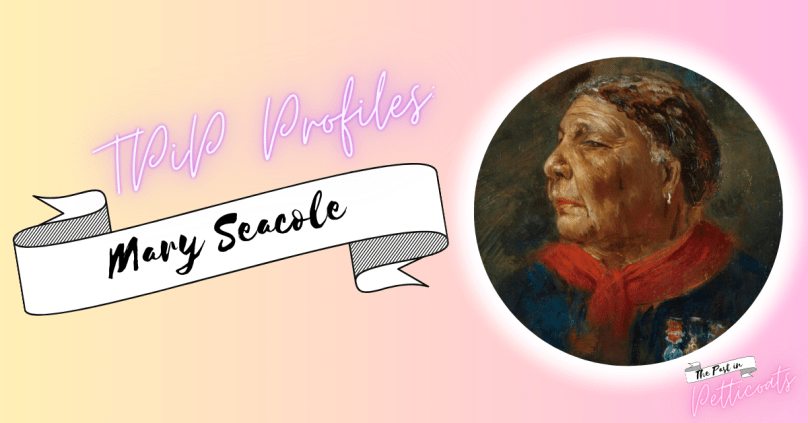
Credit to the National Portrait Gallery for the Mary Seacole portrait (painted by Albert Charles Challen)